
Table of Contents
If you are searching for gynecological laparoscopic surgery in Solapur, you are likely looking for a safer, faster-recovery option for problems like fibroids, ovarian cysts, endometriosis, heavy bleeding, or infertility-related conditions. Many women delay treatment because they fear “big surgery,” long hospital stays, or large scars. The good news is: in many cases, laparoscopy (keyhole surgery) can diagnose and treat gynecological problems with smaller cuts, less pain, and quicker return to daily life.
In this guide, you’ll learn:
- What laparoscopy is (and how it works)
- Which gynecological conditions it treats
- Benefits vs open surgery
- Expected laparoscopy recovery time
- When laparoscopy is recommended (and when it may not be)
- How Dr. Sayali Gadre helps women in Solapur with diagnosis + minimally invasive treatment
If you need personalised advice, you can directly book an appointment here: https://drsayaligadre.com/book-appointment/
What is gynecological laparoscopy?
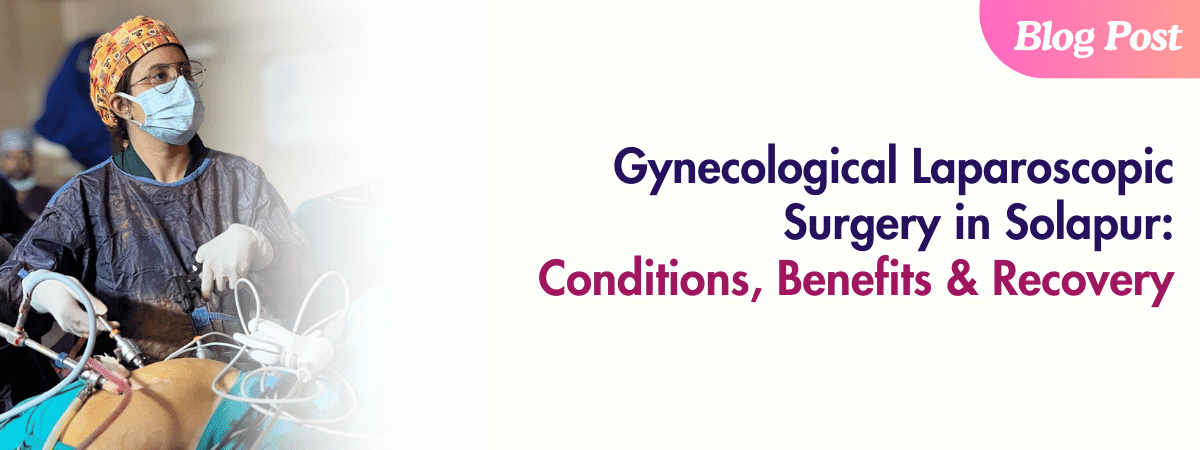
Gynecological laparoscopy is a minimally invasive surgical technique where a surgeon operates through small cuts (usually 0.5–1 cm) using a camera and specialised instruments. The camera provides a magnified, high-definition view, helping the surgeon treat the problem precisely.
This can be done as:
- Diagnostic laparoscopy: to find the cause of pain, infertility, endometriosis, adhesions, etc.
- Operative laparoscopy: to treat conditions—remove cysts, fibroids, adhesions, endometriosis, do tubal evaluation, hysterectomy (in selected cases), and more.
Compared to open surgery, laparoscopic surgery generally involves less tissue trauma and a faster recovery.
Why women in Solapur search for laparoscopy (high-intent demand)
In local searches, women commonly look for:
- “Laparoscopic gynaecological doctors in Solapur”
- “Total laparoscopic hysterectomy surgeons in Solapur”
These are not casual searches—these are made by women (or families) who are ready to consult and proceed. That’s why creating a detailed page around gynecological laparoscopic surgery in Solapur is a strong local SEO move.
Conditions treated with laparoscopic surgery for gynecology
Here are the most common gynecological problems where laparoscopy is recommended (after proper evaluation):
1) Endometriosis
Endometriosis can cause:
- Severe period pain
- Pelvic pain
- Pain during intercourse
- Infertility
- Ovarian cysts (endometriomas)
Laparoscopy helps in confirming diagnosis and treating disease by removing/ablating endometriosis deposits and releasing adhesions—often improving quality of life and fertility outcomes.
(You may also internally link your related post/page if available.)
2) Ovarian cysts
Not all cysts need surgery. But laparoscopy is commonly advised when:
- Cyst is large or persistent
- Cyst has suspicious features
- There is severe pain or risk of torsion
- There are fertility concerns
Laparoscopy allows cyst removal while preserving healthy ovarian tissue as much as possible.
3) Uterine fibroids (especially when fertility is a priority)
Fibroids can lead to:
- Heavy bleeding
- Severe cramps
- Pressure symptoms (urination frequency, bloating)
- Difficulty conceiving or recurrent pregnancy loss
For selected patients, laparoscopic myomectomy (fibroid removal while keeping the uterus) is an advanced option. You already have a blog on fibroids—internally link it naturally here:
“How fibroids affect your chances of conceiving”: https://drsayaligadre.com/how-fibroids-affect-your-chances-of-conceiving-a-baby/
4) Infertility evaluation and treatment
Sometimes, fertility tests look normal—but pregnancy still doesn’t happen. Laparoscopy may help detect:
- Endometriosis
- Tubal block
- Pelvic adhesions
- Hydrosalpinx
- Ovarian cysts
- Hidden infections / scarring
You can link your infertility blog:
https://drsayaligadre.com/infertility-treatment-in-solapur-when-to-seek-help-and-how-dr-sayali-gadre-can-improve-your-chances-naturally/
5) Ectopic pregnancy (in selected cases)
An ectopic pregnancy can be life-threatening and needs urgent medical attention. Laparoscopy is often used for management depending on stability and findings.
6) Adhesions (scar tissue) causing pain or infertility
Previous infections, surgeries, or endometriosis can cause adhesions. Laparoscopy can release adhesions to reduce pain and improve organ mobility.
7) Selected hysterectomy cases (minimally invasive approach)
For some women with heavy bleeding, fibroids, adenomyosis, or uterine pathology, a laparoscopic approach may be considered depending on evaluation and surgical suitability.
Benefits: Laparoscopy vs open surgery
Women usually choose laparoscopy because it often offers:
- Smaller cuts, less scarring: Keyhole incisions are small compared to a large abdominal cut.
- Less pain (in many cases): Smaller wounds generally mean lower post-op discomfort.
- Lower infection risk and quicker mobilisation: With smaller cuts, wound-related issues may reduce, and many patients start walking earlier.
- Shorter hospital stay: Many laparoscopic procedures are day-care or short-stay, depending on the surgery and patient factors.
- Faster recovery and return to routine: Most women can return to daily activities sooner compared to open surgery recovery timelines.
- Better surgical precision with magnified view: The camera provides a magnified surgical field, allowing careful dissection and handling.
Important: Benefits vary by patient and procedure. Your surgeon will decide the safest approach after evaluation.
To understand why it is safer, faster, and more comfortable than open surgery, read our detailed guide on the benefits of gynecological laparoscopy.
Laparoscopy recovery time: what to expect
One of the most searched questions is “laparoscopy recovery time.” Here’s a realistic timeline most patients find helpful (varies by procedure type, age, and health):
First 24–48 hours
- Mild to moderate abdominal discomfort
- Shoulder tip pain (from gas used during surgery) may occur
- Light spotting can happen in some gynecologic procedures
- Walking is encouraged as per advice
- Diet usually starts light and advances
First 7 days
- Most women can do basic home activities
- Avoid heavy lifting
- Take medicines exactly as prescribed
- Keep wounds clean and dry as advised
- Watch for fever, worsening pain, heavy bleeding, or discharge
1–2 weeks
- Many patients return to desk work (depending on surgery)
- Pain reduces significantly
- Energy levels improve gradually
- Follow-up visit is important
3–6 weeks
- For advanced procedures (myomectomy, hysterectomy, extensive endometriosis surgery), recovery may take longer
- Physical activity, workouts, and intercourse should be resumed only after medical clearance
General guidance on laparoscopy recovery and aftercare is consistent with widely used hospital guidance. If you are pregnant or planning pregnancy, following the right scan and test schedule is equally important—read our complete guide on antenatal care in Solapur.
When should you consider laparoscopic surgery?
You should consult a laparoscopic gynecologist in Solapur if you have:
- Heavy bleeding that affects daily life
- Severe period pain not improving with medicines
- Ovarian cysts found on sonography
- Suspected endometriosis
- Difficulty conceiving (especially if trying for 12 months, or 6 months if age >35)
- Recurrent miscarriages (after evaluation)
- Pelvic pain, painful intercourse, or chronic lower abdominal discomfort
- Fibroids causing symptoms or fertility concerns
If you’re unsure, the first step is a consultation and ultrasound review.
Book appointment: https://drsayaligadre.com/book-appointment/
When laparoscopy may NOT be the best option
Laparoscopy may not be suitable in every case, for example:
- Certain complex medical conditions requiring different planning
- Extensive adhesions (sometimes still possible, but depends)
- Emergency unstable cases (decision depends on clinical condition)
- Procedure-specific limitations
Your doctor will recommend the safest route after examining you and reviewing reports.
How Dr. Sayali Gadre helps women in Solapur with laparoscopy
Dr. Sayali Nikhil Gadre is a Consultant Obstetrician & Gynecologist in Solapur, known for a step-by-step, patient-friendly approach:
1) Accurate diagnosis first (no unnecessary surgery)
Many women come with fear. The first goal is to confirm:
- What exactly is the problem?
- Is surgery needed now?
- Can we treat medically first?
- Is laparoscopy the right option?
2) Fertility-preserving approach when needed
For women planning pregnancy, options like:
- Laparoscopic myomectomy
- Endometriosis surgery
- Adhesiolysis
- Diagnostic laparoscopy for unexplained infertility
can be planned with fertility goals in mind.
(Internally link relevant content for fertility planning: your infertility blog URL above.)
3) Holistic guidance (before and after surgery)
To improve outcomes, Dr. Sayali also guides on:
- Correct supplements (iron, folate, vitamin D when indicated)
- Lifestyle changes (weight, insulin resistance, PCOS support)
- Follow-up care and planning pregnancy when safe
This aligns with the practice philosophy: “Empowering Women’s Health at Every Age and Every Stage of Life.”
Preparing for laparoscopic surgery (simple patient checklist)
Before surgery, you may be advised:
- Blood tests (CBC, sugar, thyroid if required)
- ECG / chest evaluation (depending on age/medical history)
- Imaging reports review (USG/MRI in some cases)
- Anaesthesia fitness
- Medication review (especially blood thinners)
On the day of surgery:
- Fasting as per instructions
- Arrange a family member for discharge and support
- Wear comfortable clothing
After surgery:
- Take rest, avoid heavy lifting
- Keep follow-up appointment
- Do not ignore warning signs
Warning signs after laparoscopy (seek medical help urgently)
Contact your gynecologist if you have:
- Fever
- Increasing abdominal pain not relieved by medicines
- Heavy vaginal bleeding
- Pus/wound discharge or redness spreading
- Severe vomiting or breathlessness
- Fainting, severe weakness
Early attention prevents complications.
Laparoscopy in Solapur: the biggest myths (and the truth)
Myth 1: “Keyhole surgery is only for small problems”
Truth: Many advanced procedures are possible laparoscopically in expert hands.
Myth 2: “Recovery is always instant”
Truth: Recovery is faster than open surgery in many cases, but you still need rest and follow-up.
Myth 3: “Laparoscopy is unsafe”
Truth: Like every surgery, it has risks, but it is widely practiced with established safety guidance and patient aftercare protocols.
Why choosing the right laparoscopic surgeon matters
Laparoscopy is technique-sensitive. Outcomes depend on:
- Proper diagnosis
- Correct case selection
- Surgical expertise
- Safe instruments and protocols
- Post-op monitoring
If you’re exploring gynecological laparoscopic surgery in Solapur, consult an expert who can clearly explain:
- Why surgery is needed
- What procedure is planned
- Expected benefits and realistic recovery timeline
- Costs, stay duration, and follow-up plan
Book an appointment in Solapur
If you’re dealing with fibroids, cysts, endometriosis, infertility concerns, or persistent pelvic pain—don’t ignore it.
✅ Consultation + diagnosis
✅ Minimally invasive treatment planning
✅ Guidance for fertility and long-term women’s health
Click here to book an appointment.
Is laparoscopy better than open surgery for gynecological problems?
In many cases, yes—laparoscopy uses smaller cuts and can lead to faster recovery and less pain compared to open surgery, but suitability depends on the condition and patient factors.
What is the typical laparoscopy recovery time?
Many women return to light daily activities within a few days and resume routine work in 1–2 weeks for minor procedures. Advanced surgeries may take 3–6 weeks for full recovery.
Can laparoscopy help with infertility?
Yes. Laparoscopy can diagnose and treat causes like endometriosis, adhesions, ovarian cysts, and tubal problems—helping improve chances of natural conception in selected cases.
Is laparoscopy safe?
Laparoscopy is commonly performed worldwide with established safety practices. Like any surgery, it has risks, which your gynecologist will explain based on your case.
When should I see a laparoscopic gynecologist in Solapur?
If you have severe period pain, heavy bleeding, fibroids/cysts on scan, infertility, recurrent miscarriage evaluation needs, or chronic pelvic pain—consult early for proper diagnosis and options.
