
Table of Contents
The pelvic floor supports the bladder, uterus, rectum and vagina. Its muscles help control urination and bowel movements and contribute to sexual function. When these muscles or supporting tissues do not work properly, women may experience urine leakage, constipation, pelvic heaviness or discomfort.
Pelvic floor problems can occur after childbirth, during menopause or with ageing. They can also affect women who have never been pregnant. If you are looking for Pelvic Floor Dysfunction Treatment in Solapur, understanding the symptoms and available treatments is a useful first step.
Dr. Sayali Nikhil Gadre, Consultant Obstetrician & Gynecologist, evaluates women’s health concerns, including pelvic floor problems, urinary incontinence and bladder-emptying difficulties. This guide explains nine Pelvic Floor Dysfunction Symptoms, possible causes, diagnosis and Pelvic Floor Exercises for Women.
What Is Pelvic Floor Dysfunction?
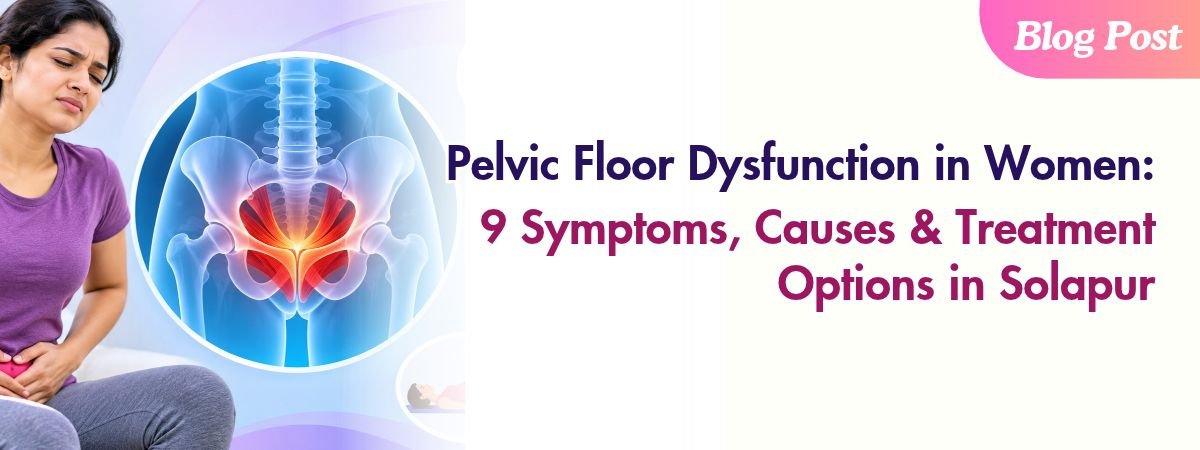
The pelvic floor is a group of muscles, ligaments and connective tissues at the bottom of the pelvis. These structures support pelvic organs and contract or relax to help control bladder and bowel function.
Pelvic floor dysfunction occurs when muscle strength, relaxation or coordination is affected. It does not always mean weakness:
- Weak muscles may contribute to urine leakage and reduced pelvic support.
- Tight or overactive muscles may contribute to pain, constipation or difficulty starting urination.
- Poor coordination may make it difficult to relax during urination or bowel movements.
The correct treatment depends on the underlying problem.
9 Important Pelvic Floor Dysfunction Symptoms in Women
1. Urine Leakage While Coughing, Sneezing or Laughing
Urine may leak when coughing, sneezing, laughing, running, jumping or lifting. This is often called stress urinary incontinence and may occur when pelvic floor support is insufficient. Persistent leakage should be assessed. Read about urinary incontinence treatment in Solapur.
2. Frequent Urination or Sudden Urgency
Frequent bathroom visits, waking at night to urinate or a sudden difficult-to-control urge may be associated with overactive bladder or pelvic floor coordination problems. Infection, diabetes and medicines can also cause these symptoms. For burning or painful urination, seek medical advice and read about UTI treatment in Solapur.
3. Difficulty Starting or Emptying the Bladder
A weak or interrupted stream, straining, difficulty starting or feeling that urine remains in the bladder may occur when pelvic floor muscles do not relax properly. Other causes include infection, prolapse, obstruction or neurological conditions. Sudden inability to pass urine, especially with painful lower abdominal swelling, needs urgent medical attention.
4. Constipation and Difficulty Passing Stools
Pelvic floor muscles need to relax during bowel movements. Poor coordination may cause straining, incomplete emptying or a feeling of blockage. Constipation may also result from low fibre or fluid intake, inactivity, medicines or digestive conditions.
5. Pelvic Pressure or Heaviness
A dragging or heavy feeling in the lower abdomen or vagina may become worse after standing or lifting. It can sometimes be associated with pelvic organ prolapse, when the bladder, uterus or rectum moves down towards the vaginal opening. Vaginal bulging should be assessed. Learn about uterine prolapse treatment in Solapur.
6. Pain During Sexual Intercourse
Tight pelvic floor muscles may cause pain during penetration or discomfort in the pelvis. Other possible causes include endometriosis, infection, vaginal dryness and menopause-related changes. A gynaecological evaluation can help identify the cause. Read about endometriosis treatment in Solapur.
7. Persistent Pelvic or Lower Abdominal Pain
Pelvic floor muscle tightness may cause aching, tenderness, discomfort while sitting or pain after bowel movements. However, pelvic pain can also have gynaecological, urinary, digestive or musculoskeletal causes. See pelvic pain in women: causes and when to visit a gynaecologist in Solapur.
8. Difficulty Controlling Gas or Stool
Weakness or injury affecting pelvic floor and anal sphincter muscles may cause difficulty controlling gas, stool leakage or bowel urgency. This can occur after childbirth, particularly following significant perineal injury. These symptoms deserve medical evaluation.
9. Reduced Sexual Comfort and Muscle Discomfort
Some women experience pelvic muscle tightness, tenderness, difficulty relaxing vaginal muscles or discomfort after intercourse. These symptoms can affect confidence and quality of life. Sexual discomfort should not be ignored or considered inevitable.
What Causes Pelvic Floor Dysfunction in Women?
Possible contributing factors include:
- Pregnancy and childbirth: Pregnancy increases pelvic pressure, while vaginal delivery stretches muscles and tissues. Difficult delivery or perineal injury may increase risk. Read about maternity care in Solapur.
- Ageing and menopause: Hormonal changes may affect vaginal and urinary tissues. Learn about menopause management in Solapur.
- Constipation and chronic coughing: Repeated straining and coughing increase pressure on pelvic structures.
- Excess body weight and heavy lifting: Both may increase pressure on the pelvic floor, especially with repeated straining.
- Pelvic surgery or injury: Procedures, injuries or childbirth-related trauma may affect muscles, nerves or supporting tissues.
- Neurological conditions or muscle overactivity: Nerve problems can affect muscle control, while tight muscles may cause pain, constipation or difficulty urinating.
How Is Pelvic Floor Dysfunction Diagnosed?
The first step in Pelvic Floor Dysfunction Treatment in Solapur is reviewing symptoms and medical history, including urinary and bowel habits, pain, childbirth, menopause, surgery and medicines.
With consent, a gynaecological examination may assess pelvic organ support, prolapse, tenderness and pelvic floor muscle control. Depending on symptoms, tests may include urine testing, measurement of urine remaining after urination, ultrasound, urodynamic testing, MRI or specialist bowel assessment. Not every woman needs advanced tests; investigations depend on clinical findings.
Pelvic Floor Dysfunction Treatment in Solapur: Available Options
Treatment depends on the type of dysfunction, severity and overall health. Many women can be managed without surgery.
1. Supervised Pelvic Floor Muscle Training
For selected women with weakness or urinary incontinence, supervised training can improve strength and coordination. A professional teaches correct contraction, relaxation and progression.
2. Pelvic Floor Physiotherapy
Physiotherapy may include muscle-awareness training, relaxation, breathing, stretching, manual therapy, functional movement or biofeedback. Tight muscles may need relaxation rather than strengthening.
3. Bladder and Bowel Training
A bladder diary, planned bathroom visits and gradual adjustment of urination intervals may help selected women with urgency. Constipation management may include suitable fibre and fluids, regular bowel habits and avoiding straining. Specialist retraining may help when muscles do not relax during bowel movements.
4. Lifestyle Changes and Pessary Support
Healthy weight management, addressing chronic coughing, adjusting caffeine if it worsens urgency and suitable lifting techniques may support symptom management. A vaginal pessary may support pelvic organs in selected women with prolapse; a healthcare professional should select its type and size and advise on follow-up.
5. Medication, Specialised Techniques or Surgery
Medication may be considered for a diagnosed condition such as overactive bladder. Biofeedback or electrical stimulation may help selected patients. Surgery may be considered for significant structural problems, including selected prolapse cases, or when suitable non-surgical care has not helped. Not every woman needs surgery.
Pelvic Floor Exercises for Women: What Should You Know?
Pelvic Floor Exercises for Women, also called Kegel exercises, involve contracting and relaxing the muscles supporting the bladder, uterus and rectum. They may help selected women with weakness, particularly stress urinary incontinence, but are not suitable for every pelvic floor problem.
If strengthening is recommended, sit or lie comfortably, relax your abdomen and thighs, gently contract the pelvic floor muscles, hold for a few seconds and release fully. Breathe normally. Avoid squeezing other muscles or holding your breath; follow professional guidance for repetitions.
The muscles used to control gas can help identify the pelvic floor. Do not repeatedly stop urine flow as an exercise because it may interfere with normal bladder emptying.
Relaxation is equally important. If muscles are tight or painful, strengthening may increase discomfort. Stop and seek advice if exercises worsen pain, pressure, urinary symptoms, constipation or pain during intercourse. Improvement varies and may take weeks or months.
Can Pelvic Floor Dysfunction Be Prevented?
Not all cases can be prevented, but healthy habits may support pelvic floor function: manage constipation, avoid repeated straining, eat a balanced diet, drink adequate fluids, stay active and learn correct exercise technique. Discuss persistent urinary symptoms with a doctor. Mention pelvic or bowel symptoms during postpartum follow-up; read about postpartum care in Solapur. Seek advice about persistent urinary or vaginal changes during menopause.
When Should You Consult a Gynaecologist?
Arrange an evaluation for repeated urine leakage, persistent urgency, difficulty emptying the bladder, constipation, pelvic heaviness, vaginal bulging, painful intercourse, pelvic discomfort or difficulty controlling gas or stool.
Seek urgent care if you suddenly cannot pass urine, have severe pelvic or abdominal pain, or develop new bowel or bladder control problems with leg weakness or numbness. Early assessment helps identify the cause and guide treatment.
Pelvic Floor Dysfunction Treatment in Solapur: Consultation With Dr. Sayali Gadre
Urinary leakage, bowel difficulties, pelvic pressure and sexual discomfort are legitimate medical concerns. Dr. Sayali Nikhil Gadre is a Consultant Obstetrician & Gynecologist with qualifications including MBBS, DGO and DNB (OBGY). Her published areas of expertise include pelvic floor problems, urinary incontinence in women and bladder-emptying difficulties.
During consultation, the doctor can review symptoms, medical history and relevant examination findings. Women from Solapur and nearby areas can seek evaluation for urine leakage, pelvic heaviness, bladder-emptying difficulties, pelvic discomfort, prolapse-related symptoms and postpartum or menopause-related concerns.
For more information, visit Dr. Sayali Gadre’s doctor profile.
Book an Appointment: If you are experiencing symptoms of pelvic floor dysfunction, book an appointment with Dr. Sayali Gadre in Solapur for an individual medical evaluation.
Conclusion
Pelvic floor dysfunction can affect bladder control, bowel movements, pelvic support and sexual comfort. The nine Pelvic Floor Dysfunction Symptoms include urine leakage, urinary urgency, difficulty emptying the bladder, constipation, pelvic pressure, painful intercourse, pelvic pain, bowel-control difficulties and pelvic muscle discomfort.
Pregnancy, childbirth, ageing, menopause, constipation, chronic coughing, injury, neurological conditions and muscle overactivity may contribute. Treatment may include supervised muscle training, physiotherapy, bladder or bowel training, lifestyle changes, medication, pessary support or surgery in selected cases.
Pelvic Floor Exercises for Women can help when weakness is present, but tight or overactive muscles may need relaxation and coordination-based treatment. If you are looking for Pelvic Floor Dysfunction Treatment in Solapur, consult a gynaecologist to discuss your symptoms and suitable options.
Frequently Asked Questions (FAQs)
1. What is pelvic floor dysfunction in women?
It is a problem with pelvic floor muscle strength, relaxation, coordination or support. It may affect urination, bowel movements and sexual comfort.
2. What are common Pelvic Floor Dysfunction Symptoms?
They include urine leakage, urgency, difficulty emptying the bladder, constipation, pelvic heaviness, painful intercourse, pelvic pain and bowel-control difficulties.
3. Can it occur after delivery or C-section?
Yes. Pregnancy places pressure on the pelvic floor, so symptoms can occur after vaginal or Caesarean delivery.
4. Are Pelvic Floor Exercises for Women effective?
They can help selected problems such as stress urinary incontinence. Correct technique matters; tight muscles may need relaxation instead.
5. Can Kegel exercises make symptoms worse?
Yes, if muscles are already tight or overactive. Stop and seek advice if pain or other symptoms increase.
6. How long does treatment take?
It depends on the cause and severity. Some women need supervised treatment for several months.
7. When should I seek medical advice?
Seek assessment for persistent leakage, heaviness, constipation, painful intercourse or difficulty emptying the bladder. Sudden inability to urinate, severe pain or new bladder or bowel dysfunction with leg weakness requires urgent care.
8. Which doctor should I consult in Solapur?
You can consult Dr. Sayali Nikhil Gadre, Consultant Obstetrician & Gynecologist. Request a consultation through Dr. Sayali Gadre’s online appointment page
